Three Facts About Your Knees That Almost Nobody Explains
They're first-year anatomy. Yet almost no one selling a joint supplement opens with them — which is exactly why they're worth reading before you compare another label.
Each one answers a question most people carry for years without ever getting a straight answer:
— Why can a knee hurt when the tissue wearing down can't feel pain at all?
— Why isn't a pill on the shelf the same thing as a pill inside the joint?
— And why might "rest it" have been the wrong advice?
No warm-up, no miracle claims. Straight into the three facts, what each one changes about how you read your own knee — and what to check before you decide on your next bottle.
The part that's wearing out can't feel pain at all.
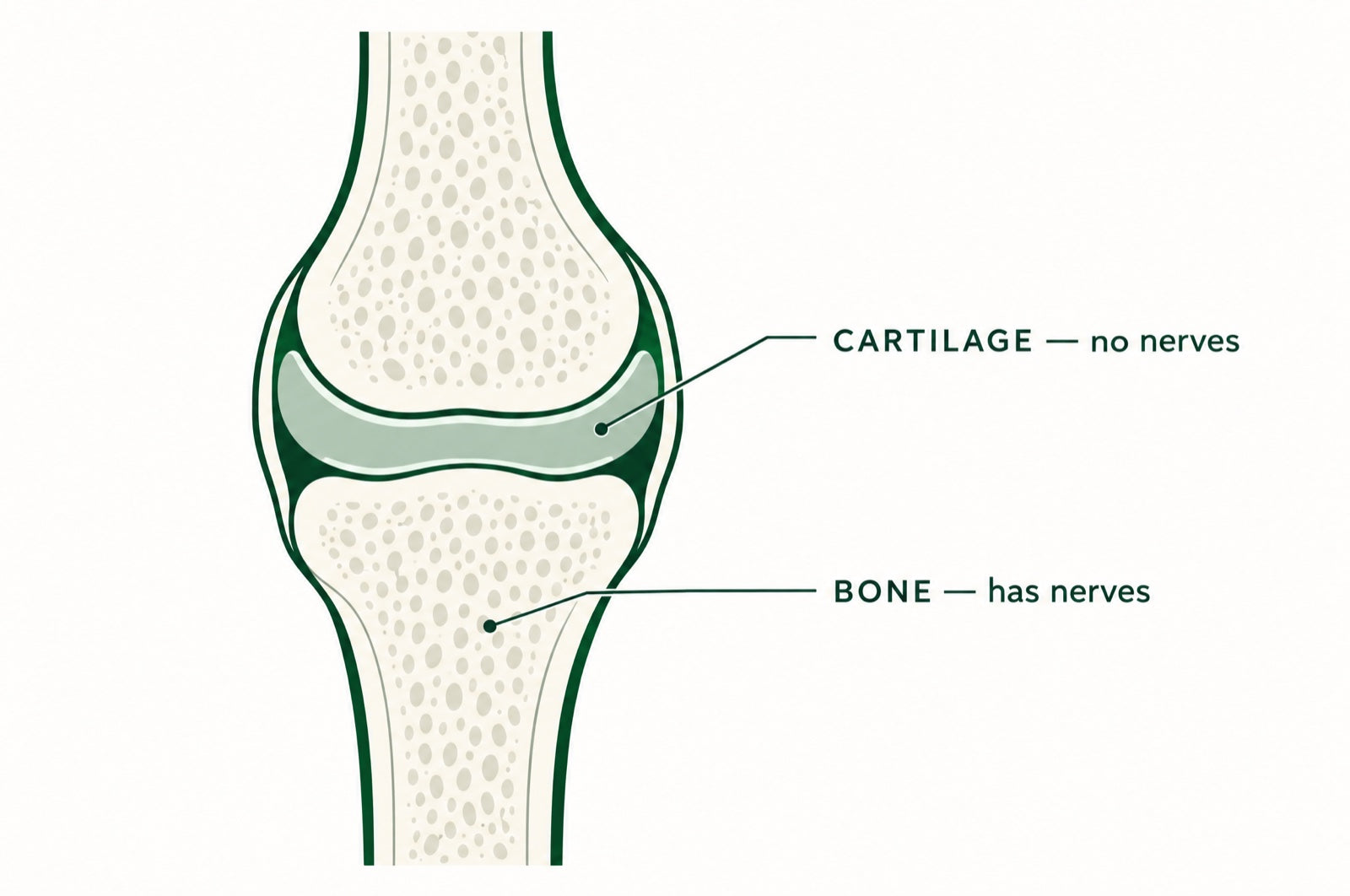
Start here, because almost everyone has it backwards.
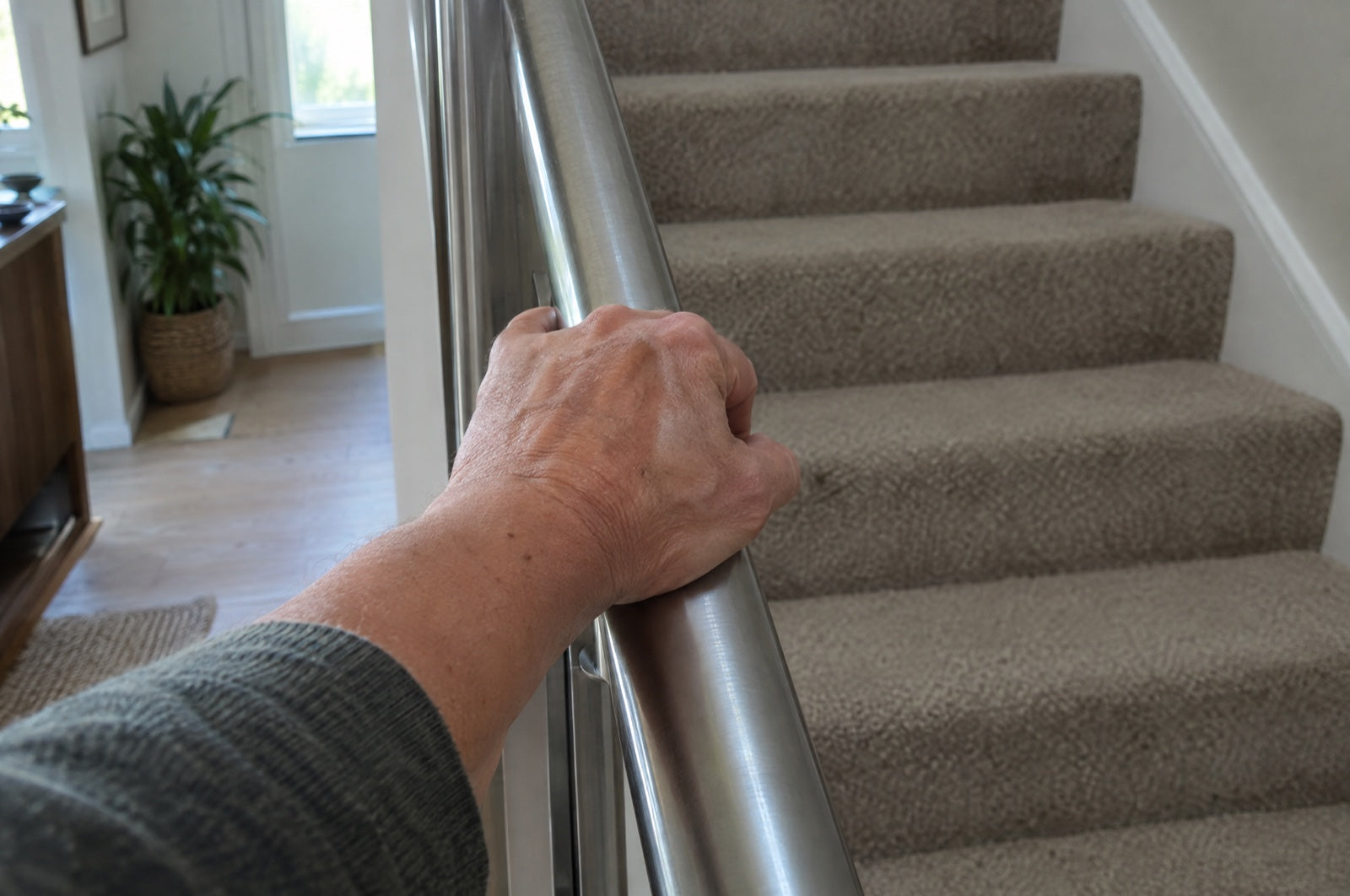
Cartilage — the cushion, the bit everyone points at and calls "the problem" — has no nerves in it. It is physically incapable of hurting. So whatever you've been feeling on the stairs or the pool steps every morning, it was never the cartilage complaining. It can't.
What you're feeling is everything around it reacting. As the cushion thins, the bone underneath takes load it was never shaped for — and bone has nerves. It swells, it aches, the joint lining reacts. That grind arrives late, from a different tissue. It's why a worse-looking knee can hurt less, and why some mornings are fine for no reason you can find.
If the pain is the reaction and not the wear, then quietening the pain and feeding the cushion are two completely different jobs. Painkillers do the first. They do nothing for the second — and most people spend years doing the first while assuming it counts as the second.
The pills aren't necessarily weak. They may never make the jump.
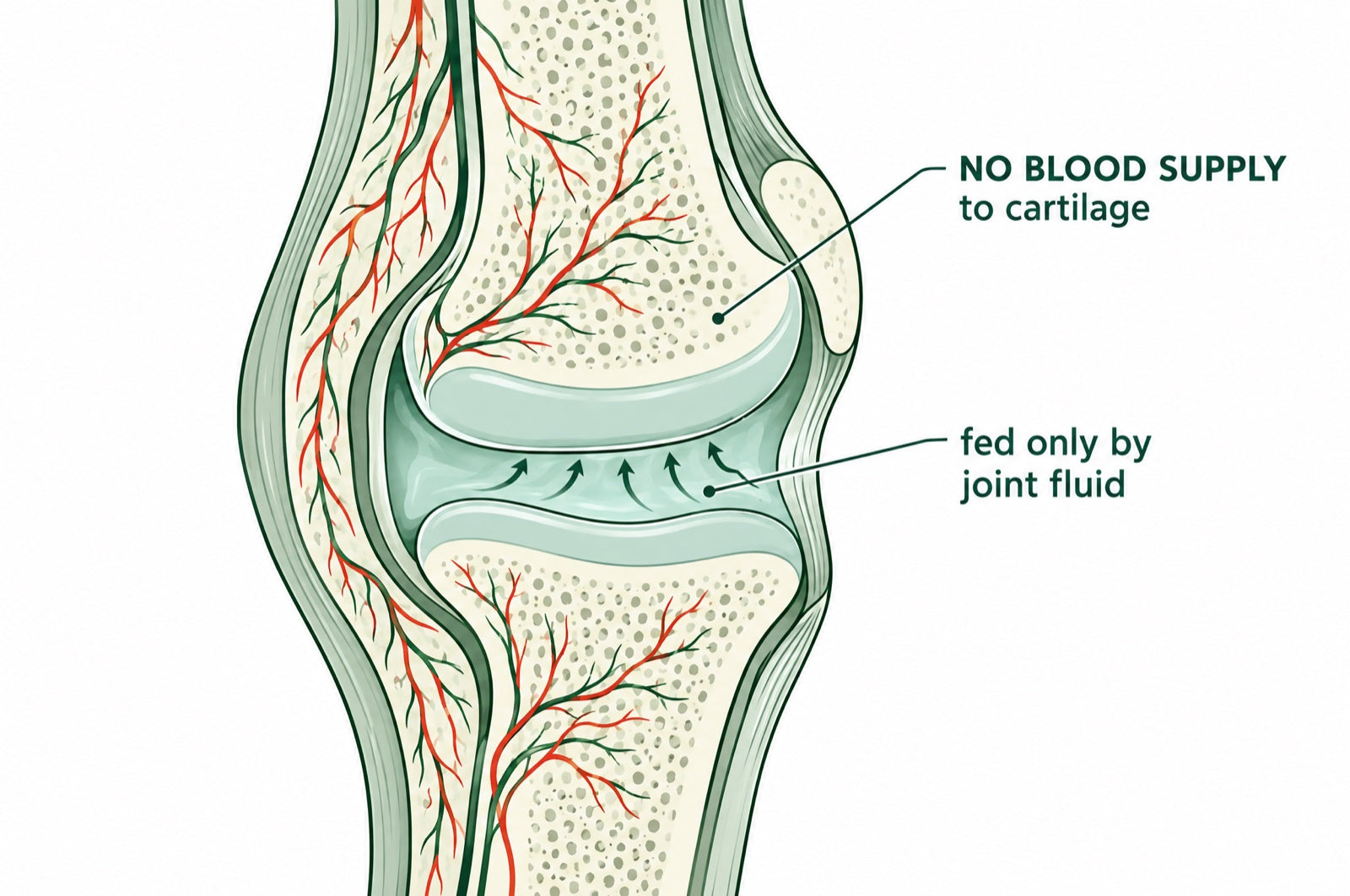
This is the one that ends most people's confusion.
The cushion has no blood supply. None. It can't pull nutrients out of your bloodstream the way muscle does — there simply isn't any blood going to it. It's a sealed cushion between two bones, and it feeds one way only: it drinks the fluid inside the joint, like a sponge. That fluid is the only delivery route there is.
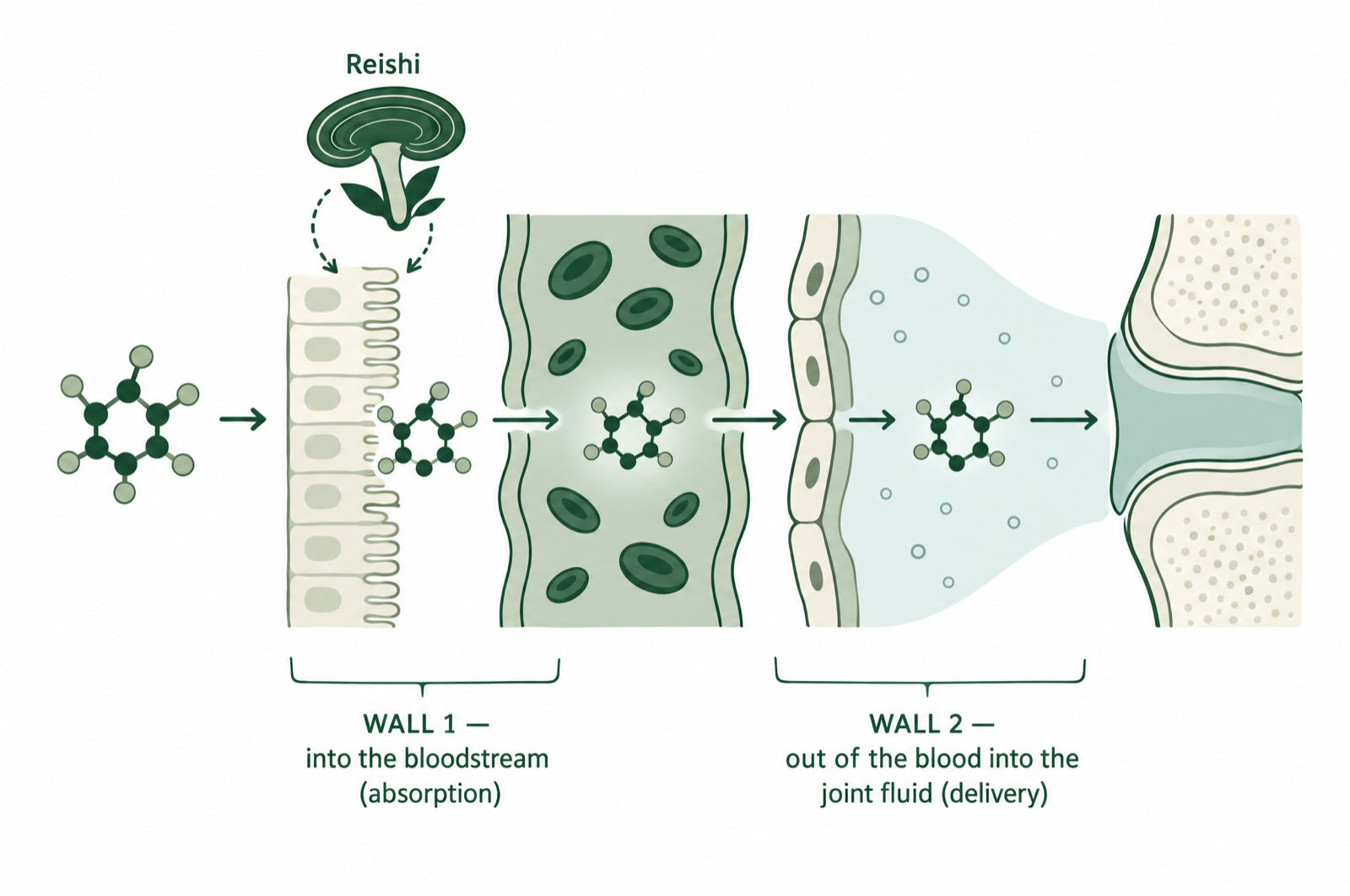
So follow a glucosamine capsule. You swallow it, it dissolves, it enters your blood. Fine — but the cushion isn't fed by blood. To actually reach it, the ingredient has to do a second thing: cross out of your bloodstream and into the joint fluid. Much of what you swallow never makes that crossing. It circulates, and it leaves.
You didn't fail the supplement. The supplement never made the jump.
The formula matters more than the milligrams shouted on the front — specifically, whether anything in the bottle helps the rest of it actually cross over. Most joint pills have nothing doing that job. (More on the one thing that changes it below.)
And that fluid only refreshes when you move.
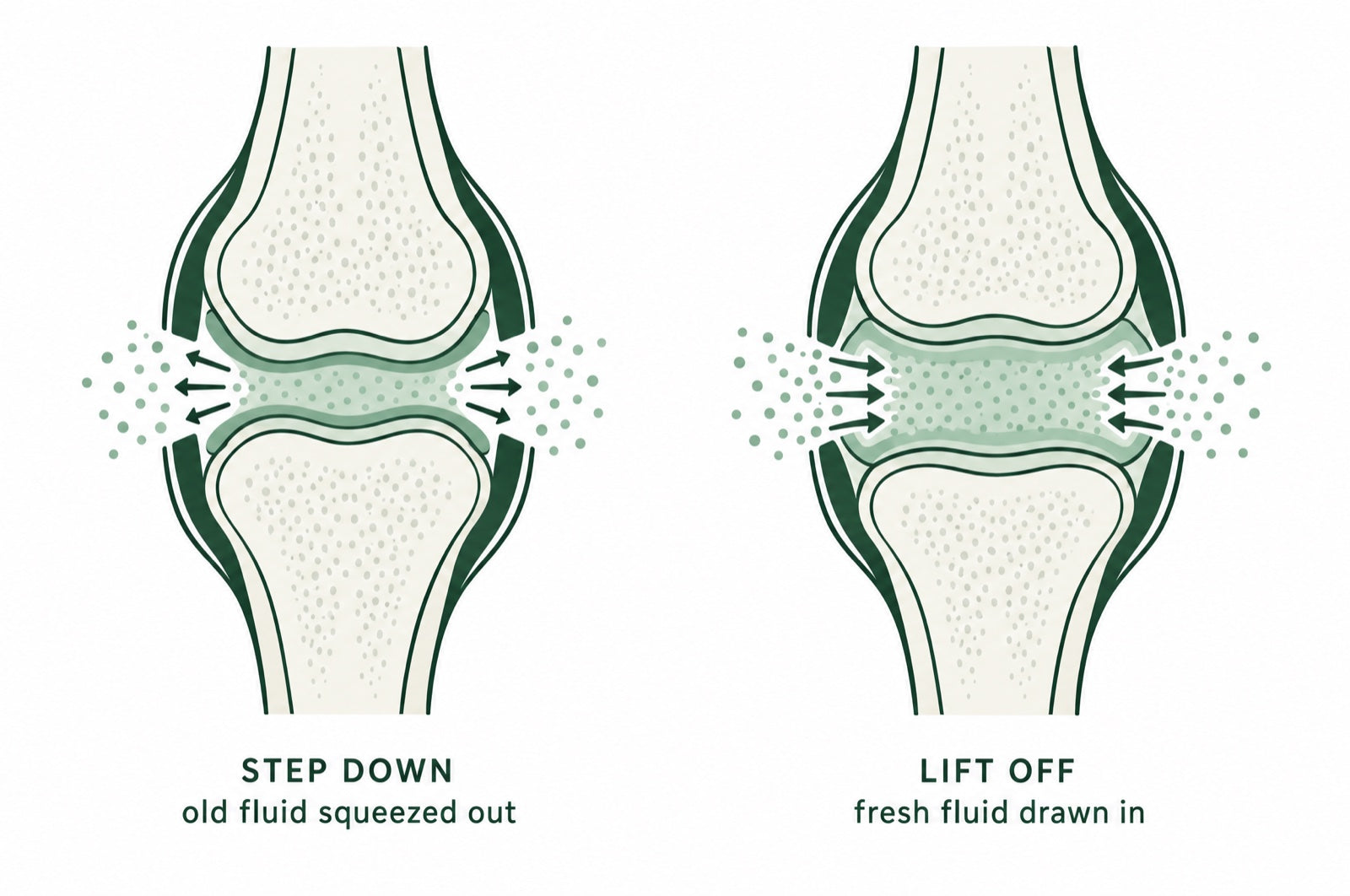
Which is why the advice most people are given is backwards.
The joint fluid the cushion drinks from doesn't just sit there topped up. A sponge sitting still in liquid barely absorbs anything — a sponge you squeeze does. Every step compresses the cushion, pushes old fluid out, and draws fresh fluid back in as you lift off. Movement is the pump — the only one the tissue has.
So resting it, bracing it, sitting out the slope or the steps "to protect it" can quietly switch off the one delivery route the tissue has. People follow that advice carefully for years, believing they're being sensible.
You may have been told to rest the one tissue in your body that only eats when it moves.
Movement isn't optional maintenance you do around the joint. For this tissue, movement is how the delivery route runs at all — the same route the pills have to reach in the fact above.
- The cushion can't warn you — so pain is a late, unreliable signal from a different tissue.
- It can't be fed through the blood — so most of what you swallow never arrives.
- Its delivery route only refreshes when you move — so stillness starves it.
Together they leave a supplement exactly one job: be present in the joint fluid at the moment you take a step. Everything else — the brand, the number on the front, how sensible you've been about resting — is downstream of that one thing.
Worth checking against the trials before ordering anything.
By this point you should be suspicious of everything with a knee on the label.
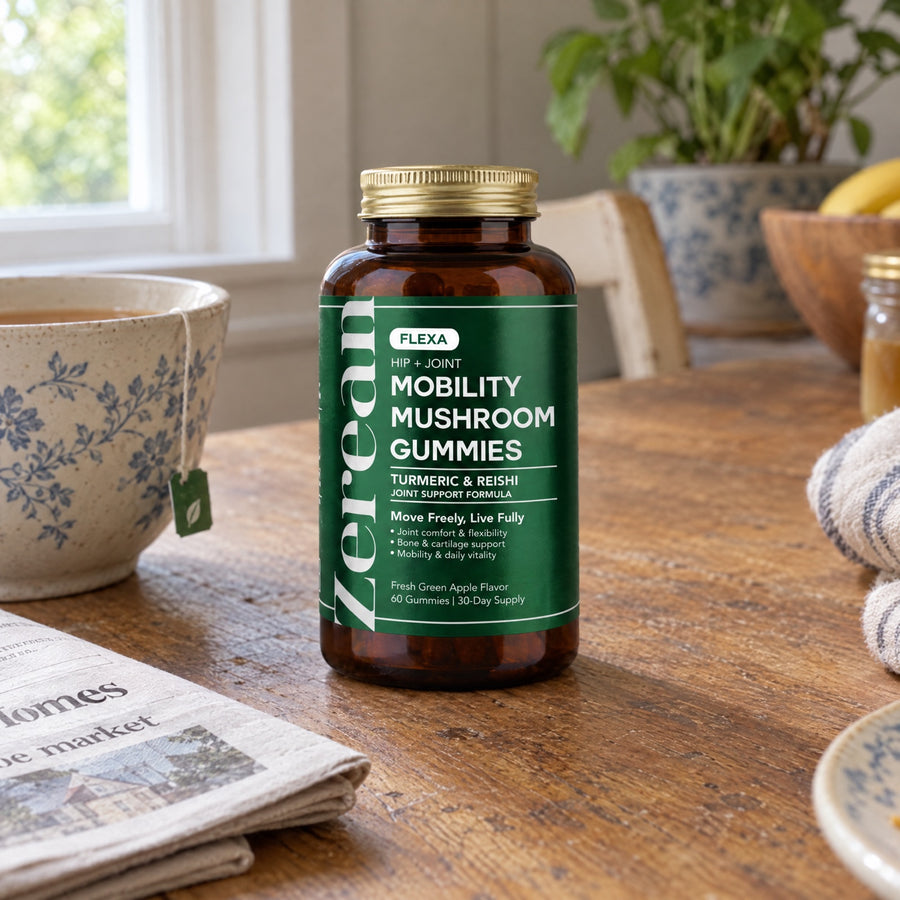
Two walls, not one. Most joint formulas lean on turmeric for comfort — and on its own the body barely absorbs turmeric; most passes straight through. So before you even reach the crossing problem, there's an absorption problem at the door. Flexa pairs its turmeric with Reishi, a functional mushroom used specifically as the absorption partner most formulas leave out.
Then the doses aren't tokens
The full daily serving — clinical doses, not a sprinkle for the label.
| What's in it | Per daily serving | Why it's there |
|---|---|---|
| Glucosamine | 1,500 mg | The building block of cartilage — the exact dose used in the big NIH-funded trial, not a sprinkle for the label. |
| Chondroitin | 800 mg | Paired with glucosamine in the same trials; helps the cushion hold water, which is what makes a cushion a cushion. |
| MSM | 1,000 mg | A sulphur compound with its own knee trials behind it. |
| Turmeric | 200 mg | The comfort compound — the thing Reishi is there to help you actually absorb. |
| Reishi | included | The absorption partner. The one most formulas skip, and the reason the rest can get in at all. |
| Vitamin D3 + Calcium | included | For the bone underneath — the tissue that actually does the complaining. |
Glucosamine and chondroitin were tested in the MOVES trial: 600-odd people, this same combination, head to head against a prescription anti-inflammatory over six months, with comparable results. Read that twice — a supplement combination, put directly against a prescription drug in a randomised trial, and holding its ground. That's a different order of evidence from a "clinically studied" badge. (The trial tested the ingredient combination, not Flexa's finished gummies — we're not going to blur that line.)
The studies referenced above
Here's the honest clock, and it's the one to hold yourself to.
Nobody gives you the timeline, so people quit at week three convinced it failed.
Weeks 1–2. Not pain relief. Looseness. The small stuff — not bracing before you stand.
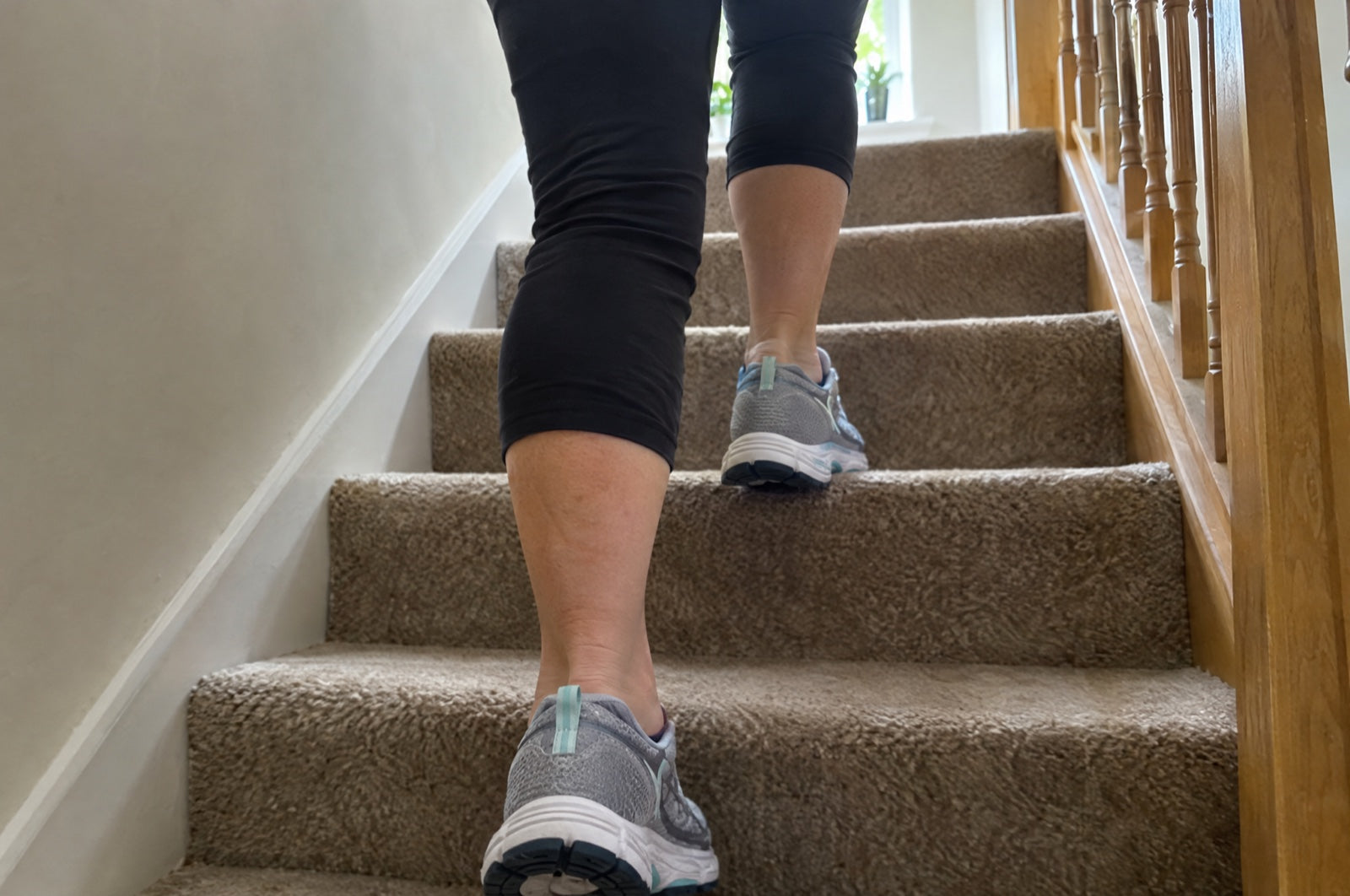
Weeks 3–6. The stairs — or the pool steps — stop being a decision you make at the top.
Weeks 6–12. The slow stretch. Raw material, delivered daily, doing quiet work you can't feel happening.
Around week 12. The honest test: the stairs, getting up off the floor, the slope. Look back and compare — don't judge it in an afternoon.
Real users, real results
People who switched to Flexa, reported at 12 weeks:
Your first bottle, 46% off
First order only, one per customer. Free shipping on orders over $80. Regular price $64.99.
4.7 on Trustpilot · GMP-Certified · Third-Party Tested
Judge it at ninety days. Not at three weeks.
You can't feel cartilage being fed in an afternoon. Glucosamine, chondroitin and MSM are raw material, not painkillers — delivered daily, doing quiet work over weeks. Most people who say a joint supplement "did nothing" stopped in week three, before anything had a chance to happen.
So don't judge this bottle overnight. Two gummies with breakfast, every day, and look back at the twelve-week mark: the stairs, getting up off the floor, the garden. That's the honest test, and it's the only one we'd ask you to run.
Questions people ask before their first bottle
No — and be wary of anyone selling you that. Flexa supplies the raw material the cushion is built from and is designed to get it where the crossing problem says it has to go. That's a smaller, honest claim.
Almost certainly the old bottle had no absorption partner and nothing helping it cross into the joint fluid — the jump, exactly. The ingredients were probably fine. They just never arrived.
No, and we won't pretend it does. It's raw material, not a painkiller. Different job, slower clock.
Your call and your clinician's, not this page's. Support and movement can both have a place — ask how they fit your situation.
Ask your GP or pharmacist first, especially on blood thinners.
Give it the full ninety days — that's the honest test this page is built around, and the only one we'd ask you to run. It's raw material on a twelve-week clock, not an overnight fix; some people won't notice a change, and we say so plainly. Questions before then? Get in touch and we'll help.
Customer Reviews